This post may contain affiliate links. Click here to learn more.
You know how sometimes the best trips are the ones that don’t go according to plan? That’s exactly what happened during our Arizona adventure, and honestly, we couldn’t be happier about how everything unfolded.
Our original itinerary had us splitting time between Saguaro National Park and Petrified Forest National Park, but Mother Nature had different ideas. A surprise weather system rolled through northern Arizona just as we were supposed to head to Petrified Forest, so we made the spontaneous decision to stay put in Tucson and really dive deep into everything Saguaro had to offer.
Best. Decision. Ever.
We got all our “roam”-ing out in both districts of Saguaro NP, then “relax”-ed at the Ritz-Carlton Dove Mountain. It turned out to be the perfect balance of desert adventure and desert luxury that we didn’t even know we were craving.
Keep reading to discover all the details about our Saguaro National Park adventure, including our favorite trails, insider tips, the ideal times to visit, and all those little details that made our trip absolutely unforgettable!
Also Read: A Weekend Adventure in Rocky Mountain National Park
History

Saguaro National Park was first established as a national monument in 1933 to protect the iconic saguaro cactus, which are native to the Sonoran Desert. These stunning cacti, some reaching over 40 feet in height, are a symbol of the American Southwest, and the area quickly gained recognition for its natural beauty and ecological significance.
In 1994, the monument officially became a national park, expanding to include both the Rincon Mountain District to the east and the Tucson Mountain District to the west of Tucson, Arizona. Over the years, the park has gained popularity and remains a unique destination for both conservation and recreation. It’s not just about the cacti — this land holds deep cultural significance for Native American communities who have lived in the region for thousands of years.
How to Get There

This park is relatively easy to get to compared to other national parks. The nearest airport is the Tucson International Airport, which is less than a 30-minute drive from the eastern sector of Saguaro National Park. We decided to fly to the Mesa Gateway Airport near Phoenix, since we have convenient direct flights from Colorado Springs. From there, it’s about a two-hour drive to Tucson. Phoenix Sky Harbor is another nearby airport.
In any case, you’ll need to rent a car to get to both sides of the park. I always recommend checking out Rentalcars.com to find the best deals on car rentals. This website compares the largest car rental companies, such as Hertz and Avis, to determine who currently offers the best prices.
Also Read: White Sands National Park: Wild & Worth It!
Saguaro National Park East (Rincon Mountain District)
We arrived in Tucson just after midnight, so the next day we got up early, had breakfast, and immediately headed out to the Rincon Mountain Visitor Center of Saguaro National Park. It was about a 30-minute drive from our hotel and easy to navigate. We visited during National Park Week, so admission was free for everyone. Because of this, I expected it to be super crowded, but the crowds weren’t bad at all.
Visitors Center

Since we have a National Park Passport, we always make it a point to stop at the visitor center to get a stamp! It’s also a great way to gather more information about the park before your visit, especially regarding the day’s conditions and any recent wildlife sightings.
The visitor center in Saguaro was one of my favorites we’ve ever visited! The floor-to-ceiling windows showed off the dramatic desert landscape and gave us a small taste of what was to come!
Scenic Drive

Whether you’re short on time or planning to spend the entire day on this side of the park, you’ll want to do the scenic drive. In fact, you pretty much have to to get to all the different trailheads. There are several pull-offs where you can take in the incredible views and learn more about the park’s iconic Saguaros, wildlife, and how the park came to be.
Desert Ecology Trail

This trail is perfect for all ages and abilities, especially since it complies with ADA standards. It’s a short trail, only about 0.3 miles, and is paved. Throughout the trail, you’ll get to enjoy all sorts of native flora and fauna, including cactus varieties, birds, lizards, and packrats. There are also benches throughout the trail, which makes it a lovely place to relax and truly take in the Sonoran Desert.
Also Read: Visiting Mammoth Cave National Park in One Day – What to See & Do
Loma Verde Trail

The Loma Verde Trail was the longest hiking trail we did during our visit. This 3.8-mile loop trail takes you through cactus groves, river beds (that flow seasonally), up to a bluff, and down through the plains. We spent about an hour and a half on this trail, following the path and stopping to admire towering cactuses and beautiful vistas. The weather was absolutely perfect, but I probably wouldn’t have done the whole thing if it were any hotter. There’s hardly any shade on this trail, so be sure to bring a hat, sunglasses, and plenty of water.
Javelina Rocks Overlook

After traversing the Loma Verde Trail, we hopped back into the car and continued on the scenic road to the Javelina Rocks Overlook. There is a small parking area where you can exit and explore. This overlook got its name because of the rock formations, which javelinas love to make their homes in. We probably spent less than 10 minutes here. It’s a great spot to take some selfies and take in the stunning views. Unfortunately, we didn’t see any javelinas. They are most active at dawn and dusk, and we visited in the middle of the day.
Also Read: New River Gorge National Park: Exploring America’s Newest National Park
Saguaro National Park West (Tucson Mountain District)
We reached the west side of Saguaro National Park in the late afternoon, about 2 pm. By then, this side of the park was quite crowded, especially since it was free admission this weekend. As always, we started our visit at the visitors center to get a stamp and more information about the trails on this side of the park. It’s about 40 minutes from the park’s east side, which is entirely different.
The west side of Saguaro National Park is much smaller than the east side, but just as stunning. We decided to enjoy a leisurely drive around the Bajada Loop Drive and stopped at the Valley View Overlook Trail. We had really hoped to go on the Desert Discovery Nature Trail, but we didn’t have any luck getting a parking spot there.
Valley View Overlook Trail

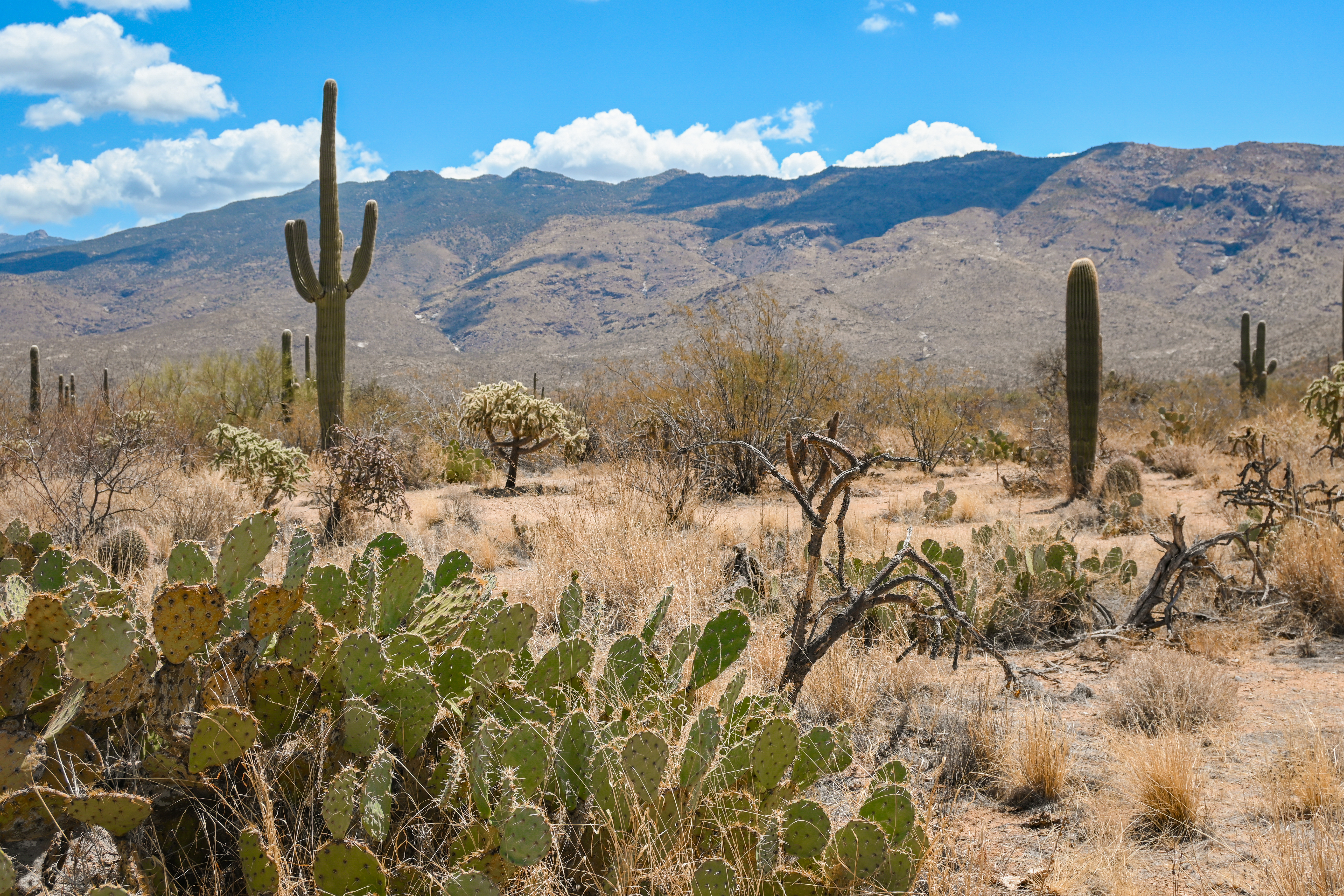
The Valley View Overlook Trail absolutely wowed me as soon as we pulled up. The trail is absolutely surrounded by a seemingly endless ocean of Saguaros, from tiny babies to towering giants. The trail is suitable for most fitness levels. There are a few steps and rocky surfaces, but nothing too intense. The entire trail is incredibly scenic, as its name suggests.
Also Read: Valley of Fire State Park: The Perfect Day Trip from Las Vegas
Best Time to Visit

The best time to visit Saguaro National Park is between November and March, according to the National Park Service. Personally, I think the best time to visit is anytime in Spring. The days start and end off cool and gradually get warmer throughout the day. If it’s a particularly hot day, you can spend the afternoons cooling off at your hotel pool or indoors, since there’s some travel between both sides of the park.
Also Read: Visiting Red Rock Canyon National Conservation Area: Scenic Drive + Calico Hills
Where to Stay
We stayed in downtown Tucson and in the nearby town of Marana. Each had a completely different vibe, but both were great options for staying while visiting the park.
Downtown Tucson: Best for Budget Travelers

Tucson isn’t a huge city. It felt super suburban with a mix of residential and commercial areas. We stayed in Downtown Tucson for the first night of the trip. It’s a very convenient place to stay, allowing for easy visits to both districts of the park, and it’s also budget-friendly. We opted for the Sheraton Tucson Hotel & Suites.
The hotel is a little past its prime, but the room was spacious, and it has a lounge, which is honestly becoming a rarity at Marriott properties. The complimentary breakfast was also delicious. We also had dinner here one night. The service was fantastic, and the food was equally impressive. The pool was huge and open, making it an excellent option for families as well.
Dove Mountain / Marana: Best for Luxury Travelers

Our original plan for this trip was to visit Petrified Forest National Park after Saguaro, but due to stormy weather, we decided to cancel that part of our trip. Instead, we made reservations at the Ritz-Carlton Dove Mountain in Marana. This was absolutely a highlight of the trip in itself. The staff was always friendly and accommodating; the room was stunning, and it provided an ideal balance of relaxation after all the hiking we did in Saguaro. Check out our full review of the resort.
The Ritz-Carlton is located north of Tucson, as are many of the area’s other luxury resorts. This includes Miraval Arizona Resort and Spa, The Westin La Paloma Resort & Spa, and El Conquistador Tucson.
Also Read: Exploring Seven Magic Mountains Near Las Vegas
Tips for Visiting Saguaro National Park

- Bring lots of water for the day. There is a water bottle filler at the Visitors Center on both sides of the park, but other than that, facilities are practically non-existent.
- Bring a snack or picnic lunch. While both parks aren’t far from civilization, there are no dining facilities in the park. We opted for our usual (granola bars)
- Dress in layers. Expect cooler temps in the morning, but a quick warm-up as the day progresses.
- Get an early start. Beat the crowds and the heat by starting your visit early in the morning. The visitor center opens at 9 a.m., but visitors can enter the park as early as sunrise, which may occur as early as 5 a.m.
Also Read: Paint Mines Interpretive Park: A Hidden Gem Near Colorado Springs [+PHOTOS]
FAQ
What’s the difference between the Rincon Mountain District and the Tucson Mountain District?
Saguaro National Park is split into two districts: the Rincon Mountain District (east) and the Tucson Mountain District (west). It takes about one hour to get from one park to the other. The Tucson Mountain District has a higher concentration of cacti, while the Rincon Mountain District is larger and is home to a greater variety of plants and wildlife.
Is there an entrance fee for each district?
No, you only have to pay the entrance fee once. After you pay the entrance fee, your pass is valid for one week in both districts.
Loved this guide? Don’t forget to pin it for later!